Choosing the Right Alcohol Still
The best spirit still isn’t necessarily the biggest, most expensive or most advanced. More often, it’s the one that suits the type of spirits you enjoy making and how involved you want to be in the distillation process.
Some distillers prioritise convenience and simplicity, while others are looking for greater control over alcohol purity, flavour retention or recipe development. Understanding the strengths of different still designs can make choosing the right equipment much easier.
Air Stills
Air stills are often the first choice for distillers looking for a straightforward, compact setup. Unlike larger reflux or copper still systems, they’re designed to keep the process simple, making them particularly popular with those new to distilling or working with limited space. Air stills use air to cool the vapour rather than a continuous water supply, making installation much simpler. Larger stills typically require a water supply for condenser cooling, so an air still can be a more flexible option for those looking to get started at home.
Their smaller batch sizes and user-friendly operation mean less setup time and fewer adjustments during a run. That simplicity doesn’t necessarily mean compromising on versatility. For example, the Still Spirits Air Still Pro can be operated in both reflux and pot still modes by removing the saddles from the column and adjusting the settings. This allows you to produce clean, neutral spirits for vodka and gin, while also giving you the flexibility to create more flavour-forward spirits such as whisky and rum from the same system.
Commonly used for:
- Vodka
- Neutral spirits
- Gin (using a neutral base spirit)
- Small-batch spirit production
Reflux Stills
Reflux stills are a popular choice for home distillers looking to produce cleaner, higher-purity alcohol, particularly if the goal is making neutral spirits for vodka, gin or spirit flavourings.
The difference lies in the way they’re designed. Inside the column are copper and stainless steel saddles that repeatedly condense and re-distil the rising vapour before it leaves the still. Each pass helps purify the spirit a little further, resulting in a cleaner flavour profile and a higher ABV than you’d typically achieve with a traditional pot still.
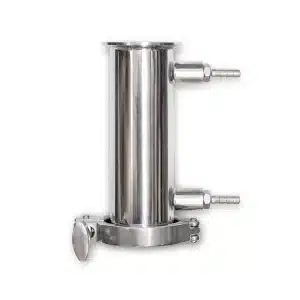
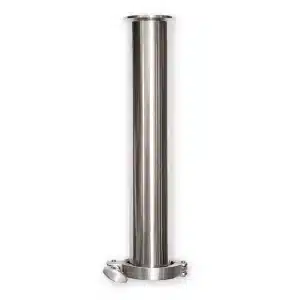
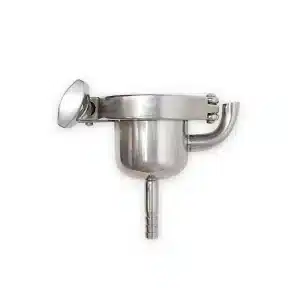
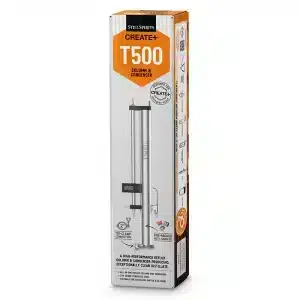
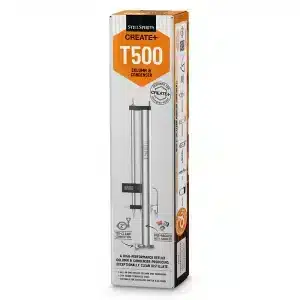
They’re ideal for anyone looking to produce a clean base spirit, but that doesn’t mean they’re limited to neutral spirits. Many reflux stills, including the Still Spirits T500, can also be run in pot still mode by simply removing the saddles from the column. That gives you the flexibility to produce clean vodka-style spirits one day and more flavour-forward whiskies or rums the next, all from the same system.
Commonly used for:
- Vodka
- Neutral spirits
- Base spirits for gin
- Higher-purity alcohol production
Copper Stills & Alembic Stills
If your goal is producing a spirit with plenty of character rather than stripping everything back to a neutral base, copper stills and alembic stills are often where experienced distillers start looking. They’re particularly popular for making whisky, rum and other traditional spirits where preserving flavour through the distillation process is all part of the finished result.
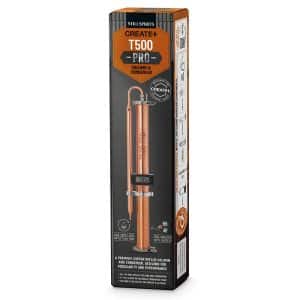
Unlike reflux stills, copper pot stills don’t use saddles inside the column to repeatedly refine the vapour. Instead, the spirit passes through with much less re-distillation, allowing more of the flavours and aromas created during fermentation to carry through into the finished spirit. The result is a spirit with more character and complexity rather than maximum alcohol purity, which is exactly why copper pot stills remain the traditional choice for many flavour-forward spirits.
Commonly used for:
- Whisky
- Rum
- Brandy
- Traditional moonshine
- Flavour-forward spirits
FAQs: Stills for Distilling
How much alcohol can a home still produce?
The amount of alcohol a home still can produce depends on the size of the system, the strength of the fermented wash and the type of still being used. As a rough guide, many distillers expect to recover around 20% of the original wash volume as finished spirit, although this can vary considerably depending on the recipe and distillation method.
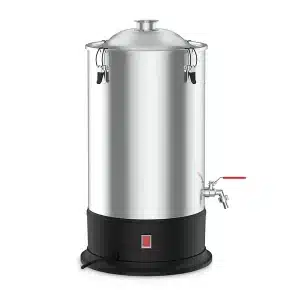
As a rough guide, many distillers recover around 20% of their original wash volume as finished spirit, although this can vary considerably depending on the recipe and distillation method. A larger 25L boiler-based setup such as a T500 system can therefore produce several litres of finished spirit from a single run, while smaller air stills are designed for lower volumes and more frequent batches.
For most hobby distillers, consistency is often more important than maximum output. A smaller still may be ideal if you’re experimenting with recipes or producing spirits occasionally, while larger systems tend to appeal to those making spirits regularly and looking to process greater volumes in a single run.
What is the best alcohol still?
The best alcohol still is often the one that matches the spirits you enjoy making most. A common mistake is buying a still based on maximum output or alcohol purity, only to discover it doesn’t suit the styles of spirit you’re actually interested in producing.
If your focus is vodka or neutral spirits, a reflux still is often the direction experienced distillers point people towards. If you’re more interested in whisky, rum or traditional moonshine, many distillers prefer copper stills and alembic stills because they’re designed to carry more flavour and character through from the fermentation process.
For those completely new to distilling, air stills remain one of the easiest ways to get started. They’re compact, straightforward to use and allow you to learn the process before deciding whether you want to invest in a larger system later on.
Are copper stills better than stainless steel stills?
Copper stills have developed something of a reputation among distillers, but that doesn’t automatically make them the right choice for every project.
If you’re producing whisky, rum or other flavour-forward spirits, many distillers prefer copper pot stills because the focus is on preserving as much character as possible from the wash. That’s why copper remains closely associated with traditional spirit production.
However, if your goal is producing clean neutral spirits for vodka or gin, a stainless steel reflux still may actually be the more practical option. In that situation, alcohol purity is often a bigger priority than flavour retention.
Where can I buy alcohol stills in the UK?
You can buy alcohol stills in the UK from The Malt Miller. The range includes air stills, reflux stills, copper stills and modular distillation systems from trusted brands such as Still Spirits and Grainfather.
Alongside still equipment, you’ll also find starter bundles, ingredients and spirit-making supplies, making it easy to build or expand a distilling setup in one place.