Which CO2 Regulator Do I Need for Home Keg Dispense?
The right homebrew CO2 regulator mostly comes down to how your gas is supplied, how many kegs you want to run, and whether your setup is fixed or portable. Those three questions narrow the field pretty quickly.
Primary CO2 Regulators for Full-Sized Gas Bottles
If you’re connecting to a full-sized pub-style CO2 bottle (the most cost-effective gas source for a permanent home draft system), the ODL Italian-made CO2 regulator is the one most experienced homebrewers end up with – or the fairly new Kegland MK5 regulator.
Built around a commercial-grade ODL SC-1 body, it delivers stable and reliable gas pressure control with a John Guest 3/8″ push-fit outlet — so it connects straight to standard 3/8″ gas line without additional adapters. As a primary CO2 regulator it holds the set pressure reliably where cheaper alternatives drift, which is what the reviews consistently come back to. If you want the same regulator with a Sodastream adapter already included for flexibility between gas sources, the ODL regulator with Sodastream adapter bundle covers that without a separate purchase.
The KegLand MK5.1 is also a popular beer gas regulator for those who want dual pressure gauges – one showing serving pressure, one monitoring the remaining CO2 tank level – alongside the convenience of tool-free cylinder attachment. The dual gauge setup gives a clearer picture of what’s happening in the brewery gas system at a glance, and the regulator ships with an adapter covering both 5/16″ and 3/8″ gas line out of the box.
Portable and Compact CO2 Regulators
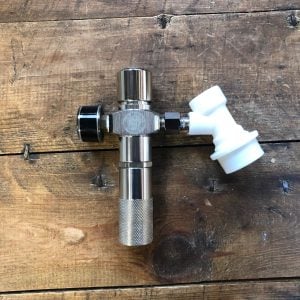
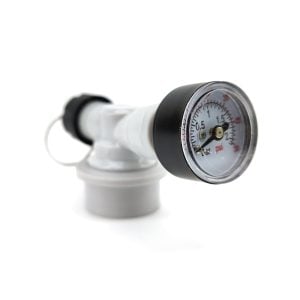
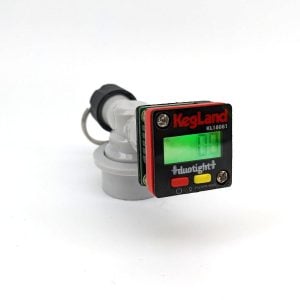
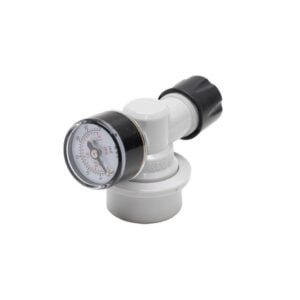
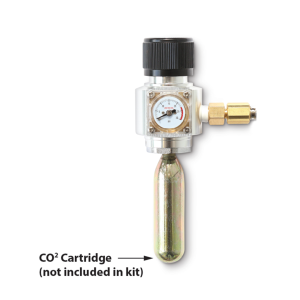
For portable dispense like taking a keg to a party, running a small home bar without a full-sized CO2 bottle, or force-carbonating on the go, the approach is a bit different. The Mini Duotight regulator bundle is the most compact option, designed for portable keg dispensing from 16g CO2 bulbs with a ball lock gas disconnect that attaches directly to the keg – no gas line required. It’s the one to reach for when portability and simplicity are the priority over carbon dioxide flow adjustment range.
The Mini 360 CO2 regulator gives more flexibility – it works with 16g bulbs, Sodastream cylinders or full-sized pub bottles depending on which adapter is fitted, and connects either directly to a disconnect or via 8mm gas line. That adaptability makes it a better fit for brewers who move between portable and fixed setups, or who want one keg CO2 regulator that can handle different gas sources as the system evolves.
Secondary and Inline Regulators for Multi-Keg Setups
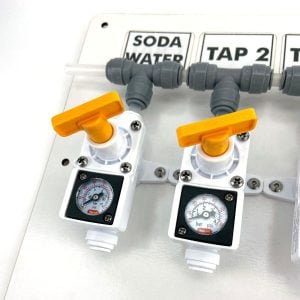
Once you’re running more than one keg, particularly where different beers need different serving pressures, secondary keg regulators are what make that manageable without multiple primary setups. The ODL secondary regulator feeds off the gas line from your primary CO2 regulator and allows independent gas pressure control and shut-off per keg, daisy-chaining to add further secondaries as the draft beer system grows. It comes fitted with 3/8″ John Guest fittings in and out, plus a plug to close off the end of the chain.
The Duotight inline regulator offers a more compact alternative for 5/16″ line setups. It sits in-line in the gas run rather than wall-mounting, which suits tighter kegerator builds where pressurised gas management on a board isn’t practical. Both include an integrated pressure gauge for monitoring output at the keg level rather than relying solely on the reading at the bottle.
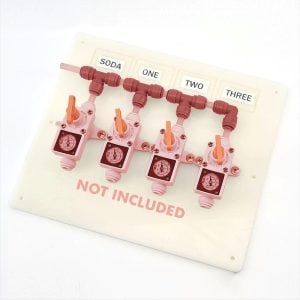
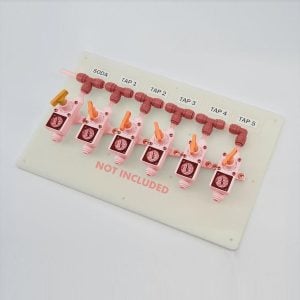
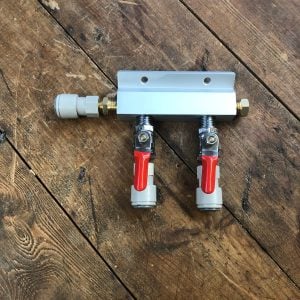
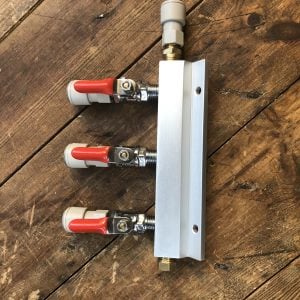
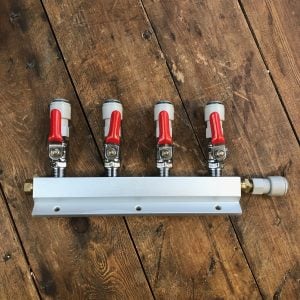
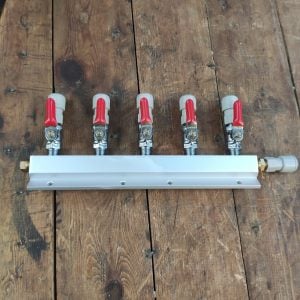
If you’d rather have everything set up and ready to go, the 4-way and 6-way gas management board kits bundle a mounting board with a full set of secondary regulators (one per line), so each keg can be set to its own serving pressure from the start. A cleaner solution if you’re building out a multi-tap setup and want to avoid piecing it together separately.
FAQs: Homebrew CO2 Regulators
What pressure should I set my CO2 regulator for serving beer?
Serving pressure depends on the style of beer, the temperature of the keg and the length of your beer line – but for most homebrew keg setups serving at fridge temperature (around 3–5°C), somewhere between 10–14 PSI is a reasonable starting point for well-carbonated ales and lagers.
Heavily carbonated styles like wheat beers may want a touch more; lower-carbonation cask-style ales less. If you’re getting excessive foam, the usual culprits are pressure set too high, beer line too short, or the keg not cold enough — rather than the regulator itself. A dual-gauge CO2 regulator like the KegLand MK5.1 makes it easy to monitor both serving pressure and remaining bottle level at the same time, which takes some of the guesswork out.
What is the difference between a primary and secondary CO2 regulator?
A primary CO2 regulator connects directly to the gas bottle and steps the high-pressure CO2 down to a usable serving pressure. A secondary regulator sits downstream in the gas line, fed by the primary, and allows you to set a different pressure for an individual keg – useful when you’re running beers that need different carbonation levels from the same gas source.
The ODL secondary regulator works on this basis: it takes the feed from your primary CO2 regulator and can be daisy-chained to add further secondaries as your setup grows. You can only have one primary regulator per gas bottle; secondaries are how you expand from there.
How do I know if my keg CO2 regulator is leaking?
The most reliable way to check for gas leaks is to spray all connections: the regulator-to-bottle joint, the outlet fitting and any inline connections, with a solution of washing-up liquid and water, then watch for bubbles while the system is pressurised.
A slow leak at the bottle connection is usually a seating or washer issue; check that the nylon washer between the regulator and CO2 bottle is in place and undamaged. A leak at the outlet is typically a poorly seated push-fit line – demount, re-cut the gas line cleanly and reseat it. If the bottle gauge is dropping with the system closed and no beer being poured, that’s the clearest sign of a leak somewhere in the system that needs tracking down before gas is wasted.
Where can I buy a CO2 regulator for brewing in the UK?
You can buy CO2 regulators and keg gas regulators at The Malt Miller, with options covering primary regulators for pub-style bottles and Sodastream cylinders, secondary and inline regulators for multi-keg setups, and compact options for portable dispense. Regulators come with push-fit outlets as standard where possible, so they connect straight to standard homebrew gas line without extra adapters.
Alongside the regulators you’ll find gas line, push fit fittings, keg disconnects and everything else needed to build or extend a home draft system.